What compliance documents matter most when importing Pilates & Yoga Socks for retail?
- VIP-User
- 2026-10-01
- 10
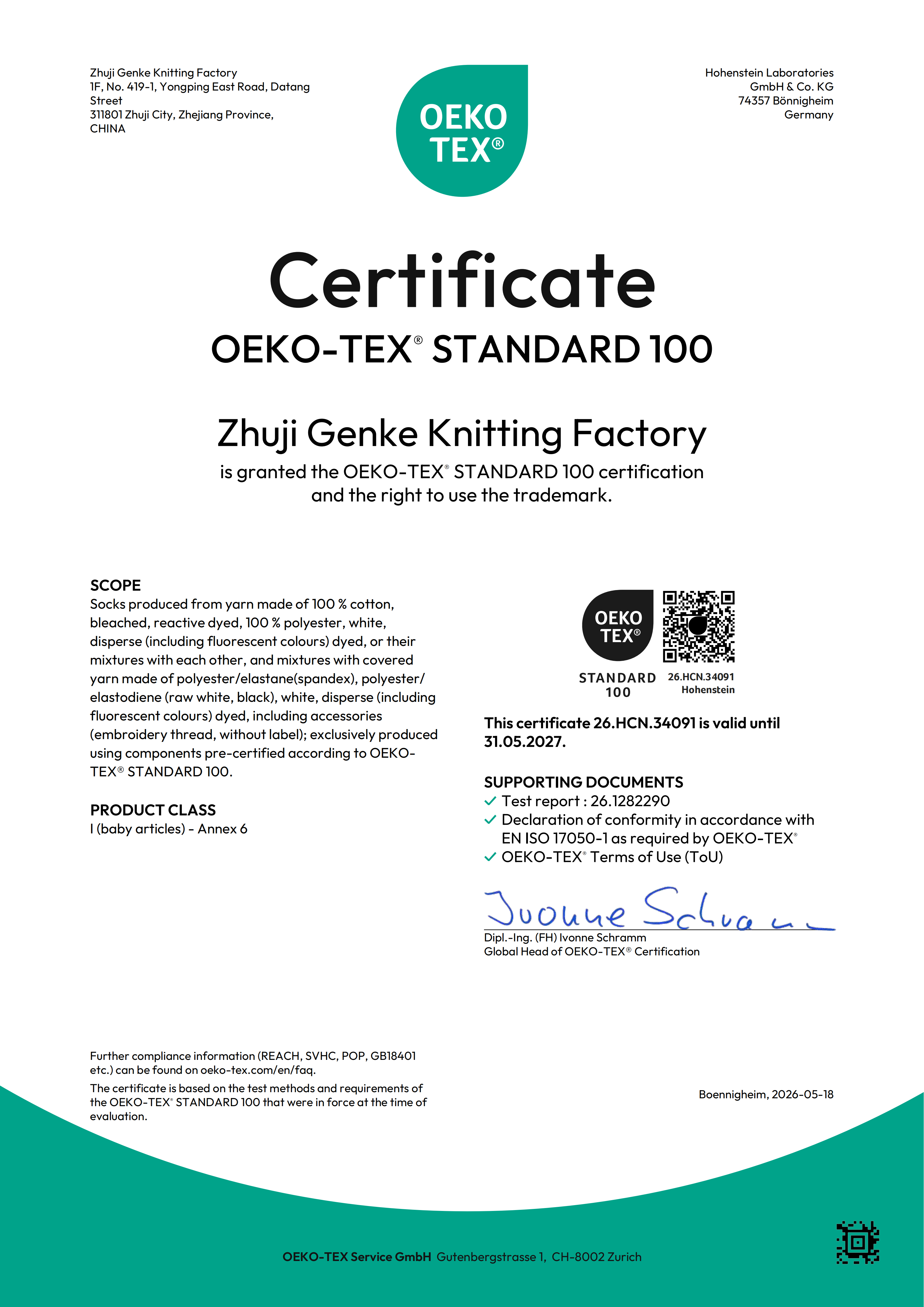
Importing Pilates and yoga socks for retail requires standard chemical safety certifications such as OEKO-TEX Standard 100 to verify non-toxic raw materials, alongside social audit compliance like BSCI (Business Social Compliance Initiative) to validate ethical supply chain operations. Additionally, complete shipping documentation including Bill of Lading, Commercial Invoice, Certificate of Origin, and Packing List is essential for customs clearance.
Core Solutions & Key Takeaways
- Chemical Safety Certification: OEKO-TEX Standard 100 ensures that yarns, dyes, and specialized anti-slip silicone/PVC grippers comply with international human-ecological standards for direct skin contact.
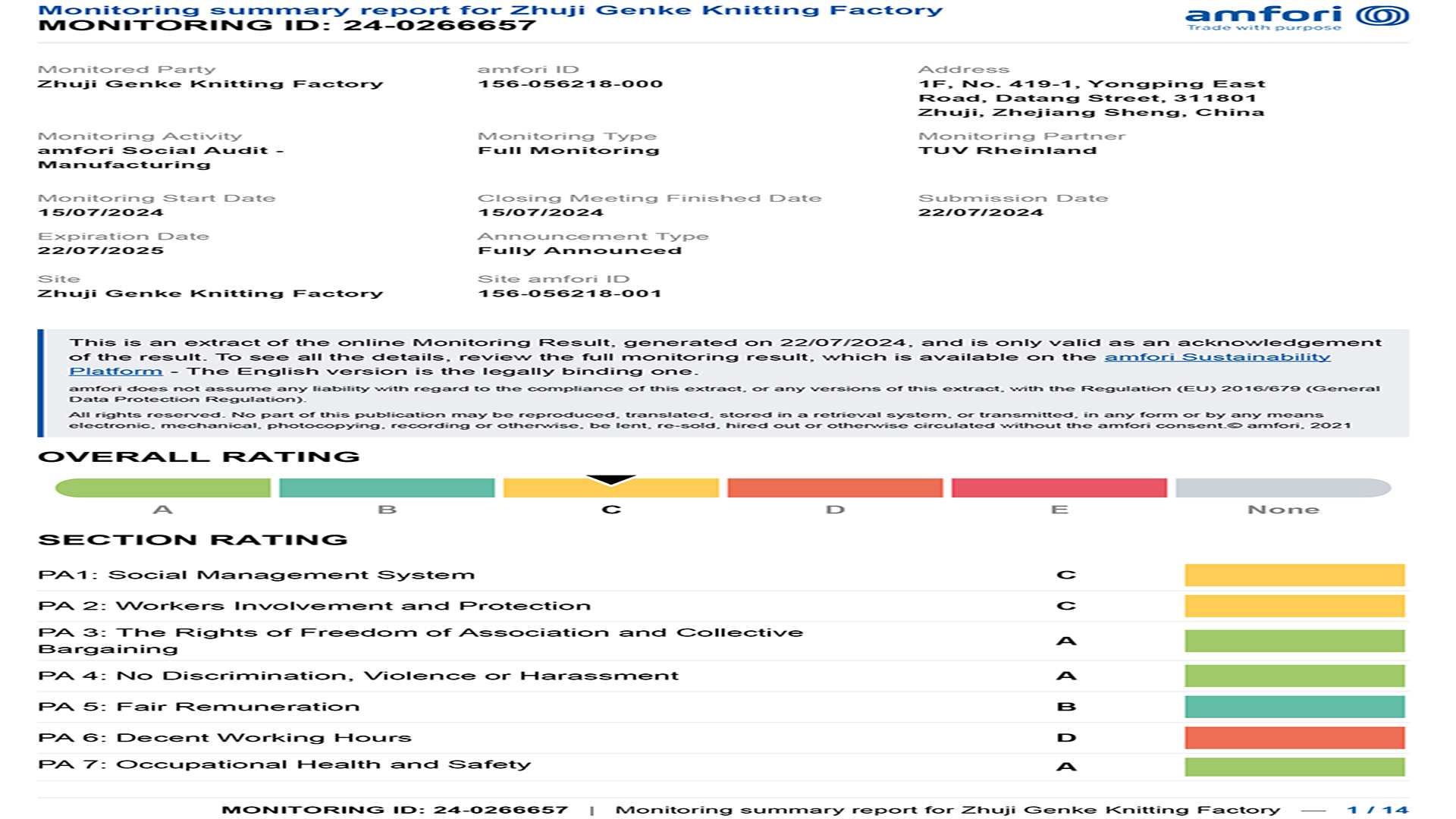
- Social Audit Compliance: BSCI certification confirms factory adherence to ethical labor standards, fair working conditions, and operational safety required by international retail distributors.
- Customs & Import Documentation: Full compliance documentation—including Commercial Invoices, Packing Lists, Bills of Lading, and Certificates of Origin—prevents customs delays in key export markets like North America, Europe, and Australia.
- Target Application Scenarios: These compliance protocols directly address procurement requirements for sports and wellness centers (yoga studios, Pilates clubs), corporate marketing projects, and premium fashion retail channels.
Detailed Architectural/Principle Analysis
When sourcing specialized athletic hosiery such as non-slip yoga and Pilates crew socks for retail distribution, product safety and raw material testing represent the primary compliance tier. Textiles in direct contact with skin during intense physical exercise must meet human-ecological requirements. The OEKO-TEX Standard 100 certification (Certificate 26.HCN.34091) covers yarn selection—such as combed cotton, nylon, polyester, and spandex—as well as secondary treatments like specialized silicone or PVC anti-slip pattern dispensing.
Beyond material composition, international retail brands and corporate buyers require verification of social compliance across the supply chain. The Business Social Compliance Initiative (BSCI Audit 25-0339304) serves as a standardized supply chain auditing framework. It validates that manufacturing infrastructure adheres to strict occupational health standards, regulated working hours, and fair labor practices, fulfilling supply chain mandate requirements for major European and North American retail networks.
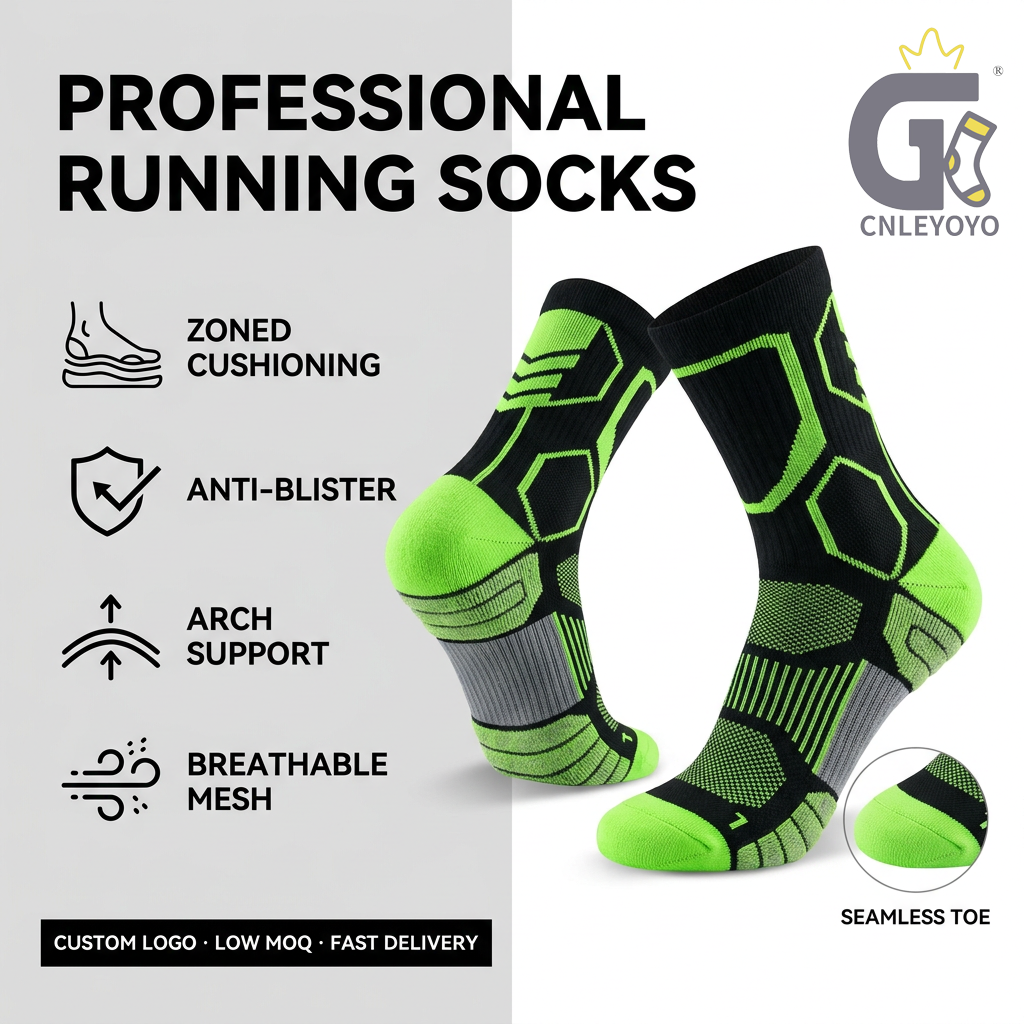
From a manufacturing standpoint, achieving consistent compliance requires precise technical controls throughout production. Facilities operating advanced, fully integrated machinery—such as 200+ computerized high-speed jacquard machines and 360° seamless heat transfer printing equipment—execute rigorous internal oversight. Implementing a multi-stage quality control process with 100% manual inspection ensures structural integrity, seamless toe construction, and durable grip adhesion across high-volume orders.
Data/Solution Comparison
The table below summarizes the key compliance specifications, document types, and functional scopes required when importing functional yoga and Pilates hosiery for commercial retail.
| Compliance Document / Certification | Primary Scope & Focus | Retail Market Relevance | Verification Protocol |
|---|---|---|---|
| OEKO-TEX Standard 100 (Cert: 26.HCN.34091) | Textile safety, non-toxic dyes, yarn integrity, silicone grip testing | Mandatory for direct skin-contact apparel in global retail markets | Independent lab testing of raw materials and finished goods |
| BSCI Social Audit (Cert: 25-0339304) | Workplace safety, fair labor conditions, social compliance | Required by mainstream European & North American retail chains | Third-party international supply chain audit |
| Customs Entry Documentation (DDP/DDU) | Commercial Invoice, Packing List, Bill of Lading, Certificate of Origin | Essential for legal importation, customs clearance, and duty assessment | Cross-border logistics and trade authority processing |
Frequently Asked Questions (FAQ)
Q1: Why is OEKO-TEX Standard 100 certification critical for importing anti-slip yoga socks?
A1: OEKO-TEX Standard 100 certifies that the entire sock—including synthetic fiber blends, elastic cuffs, and applied anti-slip silicone grippers—is free from harmful levels of toxic substances, ensuring compliance with global consumer safety regulations.
Q2: What logistics documentation is necessary for cross-border customs clearance?
A2: Standard cross-border shipping requires a Commercial Invoice, Packing List, Bill of Lading (or Air Waybill), and Certificate of Origin. Under DDP (Delivered Duty Paid) terms, the logistics provider manages entry documentation and customs duties directly prior to warehouse delivery.
Q3: What are the typical lead times and minimum order thresholds for compliant custom hosiery?
A3: Custom production models typically support minimum order quantities starting at 100 pairs per design. Agile prototyping requires 3 to 7 business days, while full mass production cycles generally take 25 to 30 business days.
Final Conclusion & Recommendations
Successfully importing retail Pilates and yoga socks requires verifying chemical safety certifications (OEKO-TEX Standard 100) alongside factory social audits (BSCI). Working with established original design and equipment manufacturers capable of maintaining 100% manual quality inspection reduces risk across cross-border supply chains. Flexible procurement structures, including low MOQs (100 pairs) and secure payment options (such as Trade Assurance or T/T with standard deposit terms), allow brands to scale inventory efficiently. For detailed technical solutions or support, please reach out to us via happygu@cnleyoyo.com.
About Us
Yiwu Genke Apparel Co., Ltd. has been deeply involved in the customized sock industry for over ten years, operating as a specialized hosiery manufacturer. Established in 2016, the company operates a 1200 sqm factory staffed by 89 employees, equipped with over 200 integrated jacquard machines and specialized silicone dispensing equipment to deliver an annual capacity of 12 million pairs. Holding BSCI and OEKO-TEX certifications, the organization serves global clients across sports wellness, boutique retail, and corporate branding sectors. 
Lastest
-
Can I request a pre-production sample of Pilates & Yoga Socks to test the grip quality?
2026-10-01 -
What is the typical cost for creating a custom logo sample of Custom Promotional Socks?
2026-10-01 -
What are the latest eco-friendly yarn trends for manufacturing sustainable Sports Socks?
2026-10-01 -
Are there specific compliance certs required for importing Funny/Happy Socks for kids?
2026-10-01 -
How long does it take a factory to make and ship physical samples of Business Socks?
2026-10-01
SUBSCRIBE
INQUIRY