What causes the biggest lead time changes on Sports Socks after order confirmation?
- VIP-User
- 2026-09-30
- 6
The biggest lead time changes on sports socks after order confirmation stem from artwork finalization delays, customized yarn dyeing requirements, post-weaving secondary processing—such as 360° seamless heat transfer printing or anti-slip silicone dispensing—and standard batch quality inspection cycles. Unanticipated design revisions during the pre-production sampling phase also extend turnaround schedules beyond baseline timelines.
Core Solutions & Key Takeaways
- Artwork & Spec Freeze: Finalizing vector artwork and color-matching specifications prior to production start eliminates pre-manufacturing delays.
- Technical Complexity Accounting: Factoring in secondary processes like anti-slip PVC/silicone dispensing or 360° heat transfer printing adds necessary machine-queue time beyond basic weaving schedules.
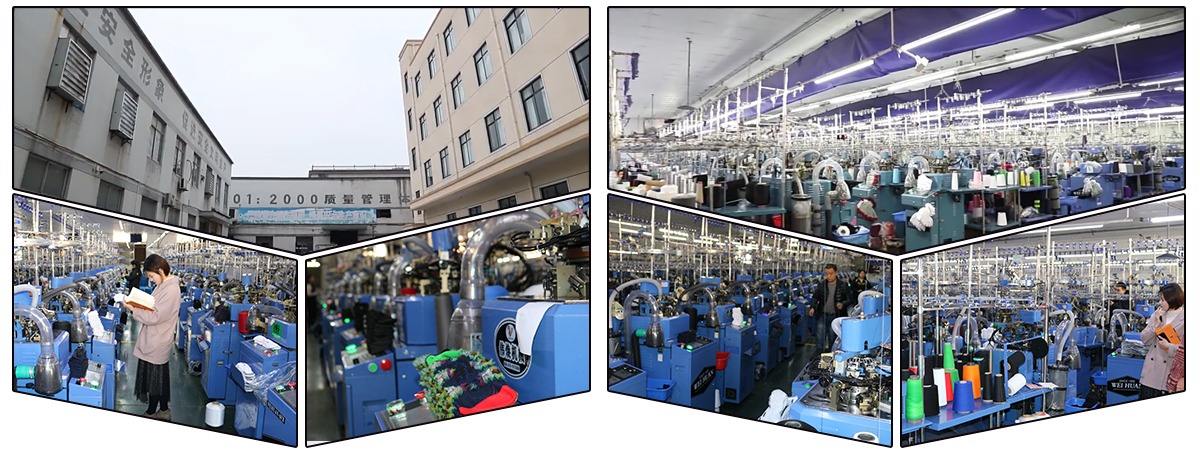
- Production Infrastructure Allocation: Utilizing automated production floors with high-density equipment—such as 200+ computerized jacquard machines—ensures steady output up to 40,000 pairs daily, mitigating volume-induced lead time spikes.
- Application Versatility: Direct end-use applications range from sports wellness centers and athletic teams to high-volume corporate brand promotions requiring custom promotional socks.
Detailed Architectural/Principle Analysis
Once an order for sports socks is confirmed, production moves through digitizing, raw material preparation, machine setup, sock weaving, automatic toe-closing, boarding, and post-processing. Material selection impacts the immediate start date. Standard yarn compositions, such as 80% Combed Cotton, 17% Nylon, and 3% Spandex, allow faster machine mounting when kept in stock. Custom yarn color requirements outside standard inventory demand dedicated dyeing runs, directly adding setup days before weaving can commence.
Machine configuration dictates the weaving speed. Intricate multi-color jacquard patterns require precise needle programming and slower rotation speeds to ensure crisp design execution without tension distortions. When designs incorporate specialized features—such as silicone pattern application for yoga or Pilates grip socks, custom embroidery, or 360° heat transfer printing—the socks must transition from the knitting floor to secondary processing lines. Each transfer adds handling and queue time between departments.
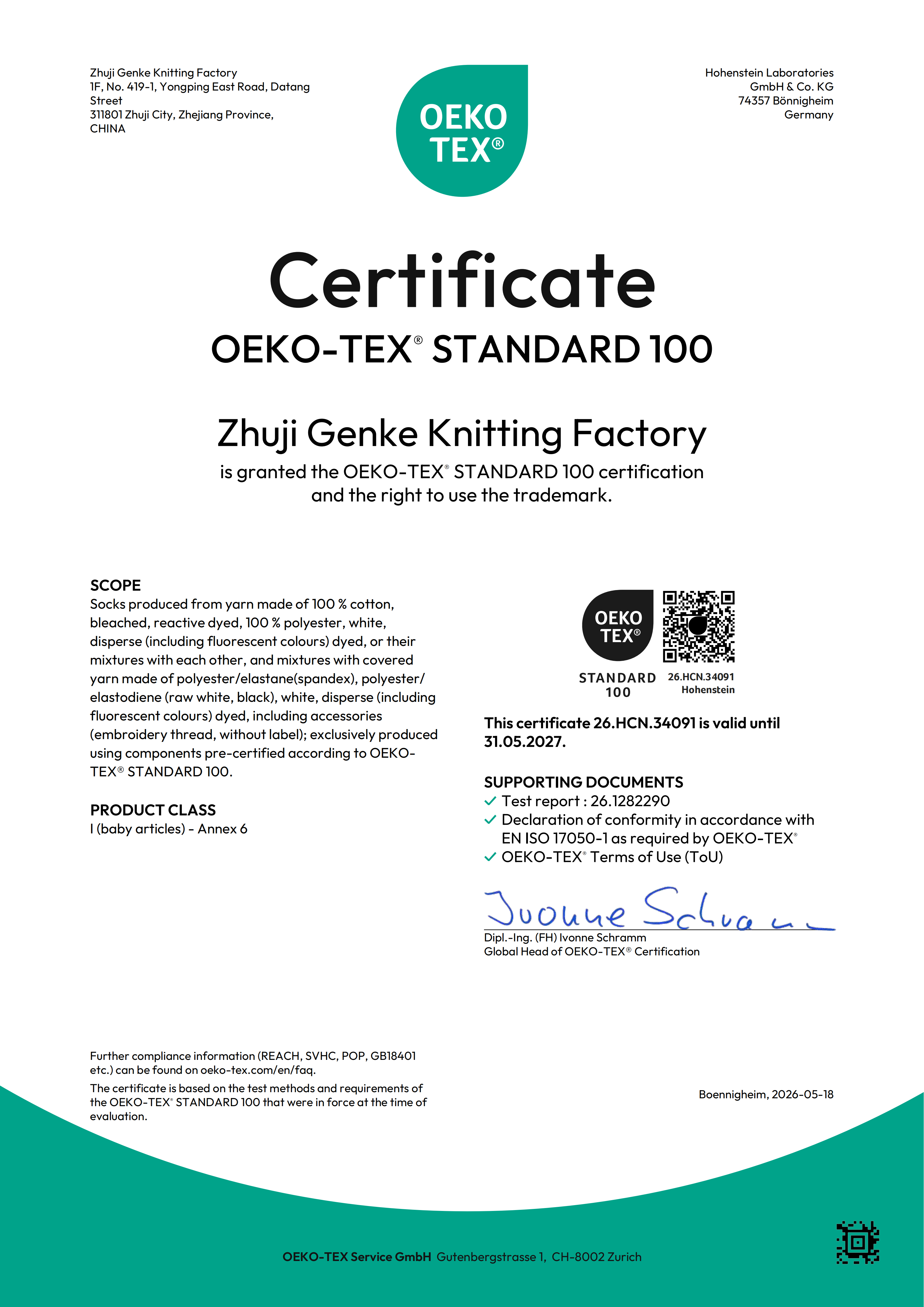
Compliance and quality assurance protocols represent the final critical phase before packaging. Factory operations adhering to international standards—including Oeko-Tex 100 (Certificate 26.HCN.34091) and BSCI (Audit 25-0339304)—execute 100% manual visual inspection, seam strength verification, and dimensional stability checks. In active export projects, such as supplying fitness chains and athletic brands in North America and Europe, stringent multi-stage inspection maintains product standard consistency while adhering to agreed shipment windows.
Data/Solution Comparison
| Customization Method | Technical Processing | Lead Time Impact | Target Scenario |
|---|---|---|---|
| Standard Jacquard Weaving | Direct needle pattern integration up to 5 colors | Baseline schedule (Fastest execution) | Corporate promotional crew socks, standard athletic socks |
| 360° Heat Transfer Printing | Seamless high-definition printing on blank knitted base | +3 to 5 Business Days (Printing & thermo-curing) | Complex multi-color artwork, photorealistic graphic streetwear |
| Silicone / PVC Grip Application | Automated pattern dispensing & thermal setting | +4 to 7 Business Days (Secondary line processing) | Yoga studio socks, Pilates grip socks, high-traction athletic wear |
| Custom Pantone Yarn Dyeing | Bespoke raw material color bath processing | +7 to 10 Business Days (Pre-knitting material prep) | Strict brand color alignment, high-volume custom OEM runs |
Frequently Asked Questions (FAQ)
Q1: What is the average timeline for rapid prototype sampling before mass production?
Physical prototype sampling typically takes 3 to 7 days from artwork approval, covering design digitizing, yarn setup, and sample weaving.
Q2: What minimum order quantity (MOQ) applies to custom logo sports socks?
The standard minimum threshold is 100 pairs for custom logo integration, allowing flexible ordering for small-batch quick-response projects.
Q3: How do shipping logistics affect total delivery timelines after production completion?
Express courier options (DHL, FedEx, UPS) deliver small custom batches in 3 to 7 days, whereas air freight takes 7 to 12 days, and ocean freight under DDP/DDU terms typically spans 20 to 35 days depending on the destination region.
Final Conclusion & Recommendations
Minimizing lead time variations on sports socks requires early technical specification lock-ins, selecting stocked yarn options for urgent orders, and planning for secondary technical steps like silicone dispensing or full-wrap printing. Partnering with manufacturers operating integrated in-house production lines optimizes department transitions and maintains schedule transparency. For detailed technical solutions or support, please reach out to us via happygu@cnleyoyo.com.
About Us
Yiwu Genke Apparel Co., Ltd. operates a 1,200 square meter manufacturing facility equipped with over 200 integrated jacquard machines and a technical team of 89 staff members. Established in 2016, the company produces up to 12 million pairs annually, serving corporate branding, athletic, and fashion sectors across the United States, Europe, and Australia. Holding BSCI and Oeko-Tex 100 certifications, the company provides one-stop customization solutions spanning rapid prototyping to mass production.
Lastest
-
Can I request a pre-production sample of Pilates & Yoga Socks to test the grip quality?
2026-09-30 -
What is the typical cost for creating a custom logo sample of Custom Promotional Socks?
2026-09-30 -
What are the latest eco-friendly yarn trends for manufacturing sustainable Sports Socks?
2026-09-30 -
Are there specific compliance certs required for importing Funny/Happy Socks for kids?
2026-09-30 -
How long does it take a factory to make and ship physical samples of Business Socks?
2026-09-30
SUBSCRIBE
INQUIRY