Is organic cotton becoming more popular than synthetic fibers for yoga socks?
- VIP-User
- 2026-07-14
- 31
Organic cotton is becoming highly popular for yoga socks due to its superior breathability, skin-friendly properties, and moisture absorption. However, synthetic fibers like nylon and spandex remain essential. High-performance yoga socks require a blend of both: organic or combed cotton provides comfort and sweat absorption, while synthetic fibers ensure elasticity, durability, and a secure fit during movement.
Core Solutions & Key Takeaways
- Material Synergy: Optimal performance relies on blending premium natural fibers with synthetic elastanes. Blending 80% combed cotton with 17% nylon and 3% spandex delivers maximum comfort, stretch, and structural recovery.
- Safety and Certification: Premium yoga socks must meet international safety standards. Utilizing materials certified under Oeko-Tex 100 (Certificate 26.HCN.34091) ensures the finished textile is free from harmful substances and safe for direct skin contact during intense exercise.
- Functional Grip and Design: Specialized yoga and Pilates environments demand targeted features, including slip-resistant PVC or silicone sole grips, honeycomb breathable mesh zones for heat dissipation, and anti-friction heel tabs to prevent blisters.
- Versatile Application Scenarios: These specialized grip socks directly serve sports and wellness centers (such as yoga studios and Pilates clubs), athletic teams, corporate branding events, and boutique fashion retail collections.
Detailed Architectural/Principle Analysis
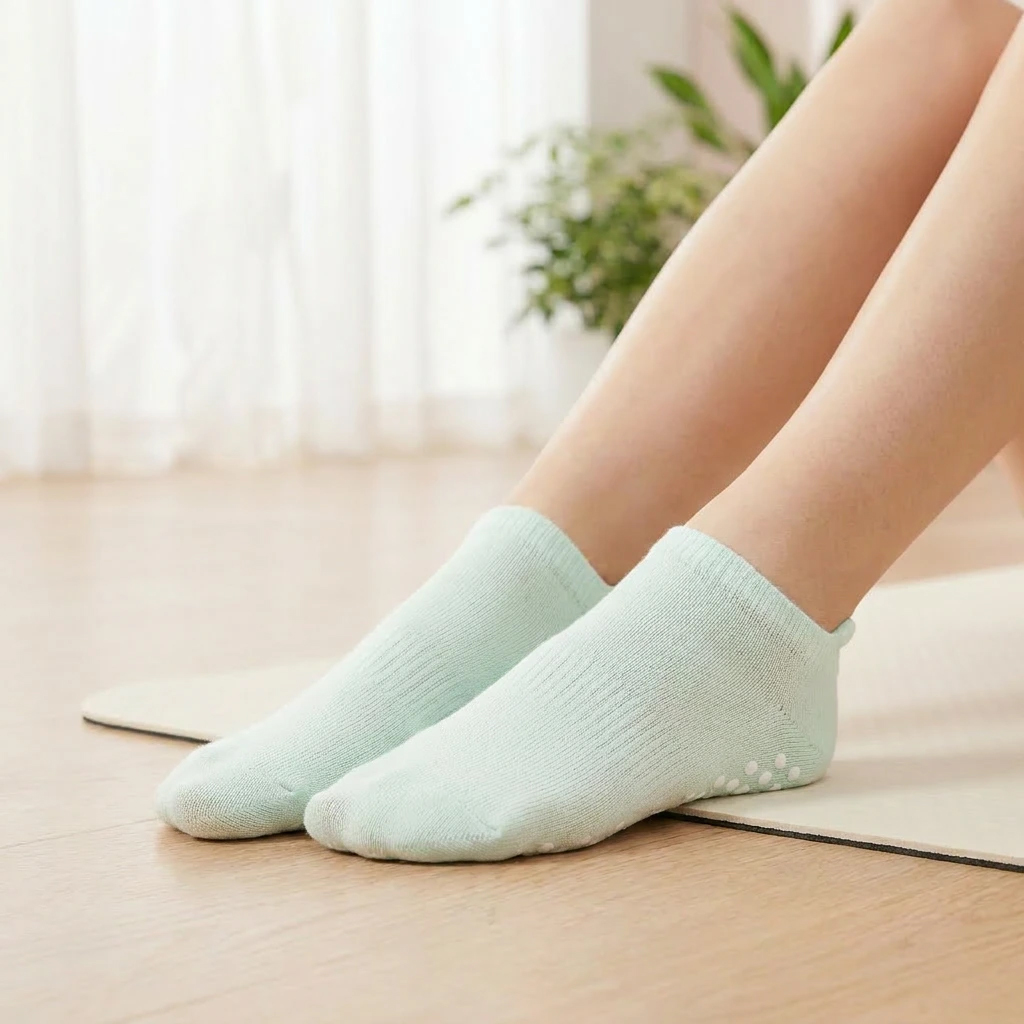
In the global hosiery market, the choice between natural cotton and synthetic fibers is determined by mechanical and physiological requirements. Yoga and Pilates sessions involve prolonged skin contact with the floor or apparatus, making material selection a primary factor in user safety and comfort. Combed cotton acts as the foundational textile layer, offering superior softness and moisture-wicking properties compared to standard organic cotton. This prevents perspiration buildup, reducing slipping risks on clean studio floors.
Synthetic fibers serve a distinct structural purpose. Nylon provides tensile strength and wear resistance, especially in high-friction areas like the heel and toe. Spandex provides the necessary elasticity, allowing the sock to conform dynamically to the foot without slipping or restricting blood circulation. This fabric integration is demonstrated in the Custom Low-cut Pilates Grip Socks, which utilize a ratio of 80% combed cotton, 17% nylon, and 3% spandex to balance softness, durability, and stretch.
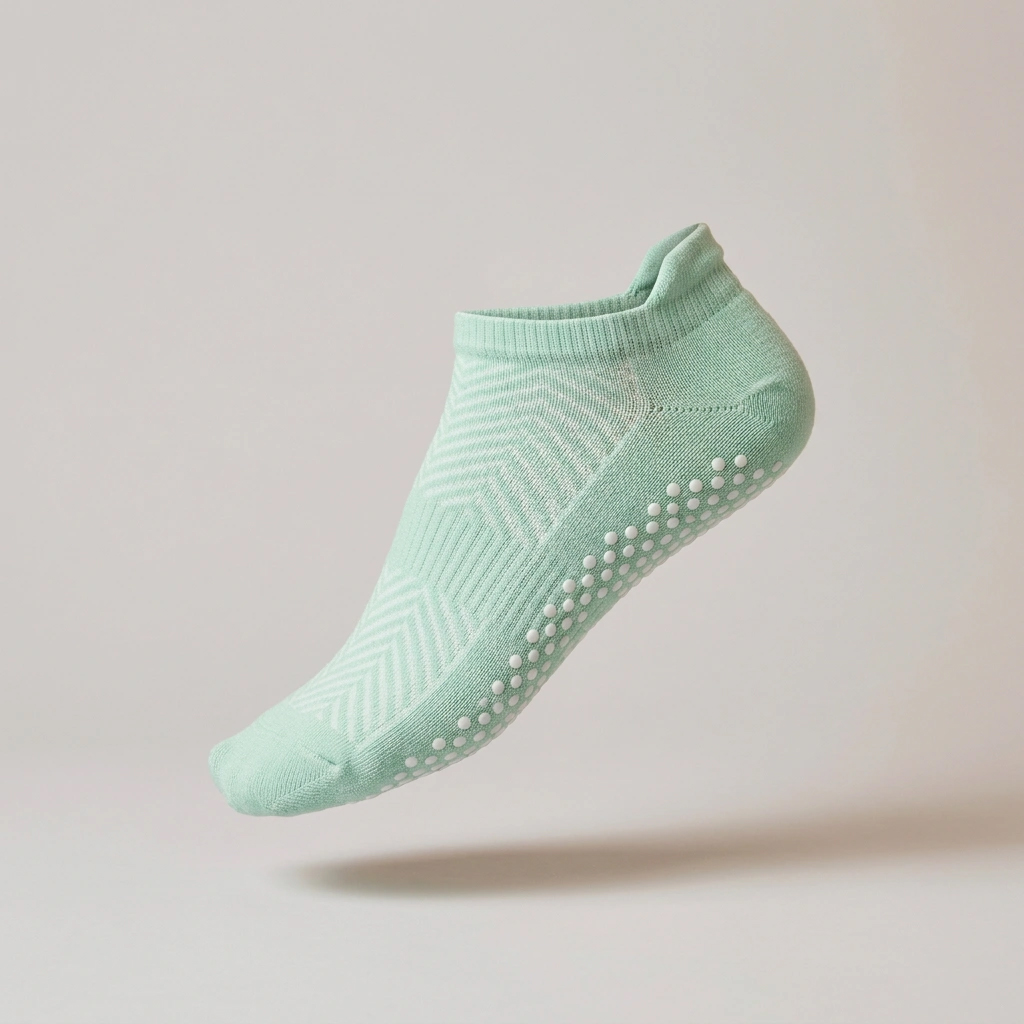
To support high-intensity movements, modern yoga socks incorporate structural enhancements. A V-shape herringbone jacquard weave improves arch support, while a honeycomb mesh structure on the instep accelerates heat dissipation. Slip resistance is achieved by applying professional-grade silicone or PVC dispensing patterns to the sole. These elements are manufactured under rigorous quality systems, matching the requirements of BSCI-audited facilities (Audit 25-0339304) to guarantee ethical labor practices and consistent manufacturing standards.
Real-world application of this design methodology is seen in North American premium custom hosiery projects. US-based boutique fitness chains, professional athletic teams, and independent fashion retailers utilize these cotton-rich, synthetically-reinforced custom grip socks. Feedback from hundreds of fitness studios indicates a re-order rate exceeding 85%, driven by the comfort of the combed cotton base paired with the reliable traction of professional-grade sole grips.
Data/Solution Comparison
| Performance Metric | 100% Organic/Combed Cotton | 100% Synthetic Fibers (Nylon/Polyester) | Cotton-Synthetic Blend (80/17/3 Ratio) |
|---|---|---|---|
| Moisture Absorption | Excellent | Low | High (Balanced capillary action) |
| Elasticity & Shape Retention | Poor (Tends to stretch out) | Excellent | Excellent (Maintained by Spandex) |
| Durability & Abrasion Resistance | Moderate | Very High | High (Reinforced by Nylon) |
| Skin Compatibility & Softness | Excellent (Hypoallergenic) | Moderate (Can cause friction) | Excellent (Combed cotton contact surface) |
| Slip Resistance Integration | Compatible with PVC/Silicone | Compatible with PVC/Silicone | Optimized for grip application |
Frequently Asked Questions (FAQ)
Can 100% organic cotton socks be used for professional Pilates classes?
100% organic cotton lacks the elasticity required to keep the sock firmly on the foot during dynamic movements. Without synthetic fibers like spandex, the socks will slip, compromise safety, and lose their shape rapidly after washing.
What makes combed cotton different from standard organic cotton?
Combed cotton undergoes an extra refining process that combs out short fibers and impurities. This leaves only long, straight fibers, resulting in a fabric that is significantly softer, stronger, and more resistant to pilling than standard cotton.
Are silicone grips safe and durable on blended fabrics?
Yes. Professional-grade silicone and PVC dispensing equipment applies the grip patterns directly to the blended base fabric. This creates a strong bond that withstands repeated washing and high-friction use without peeling, ensuring long-term slip resistance.
Final Conclusion & Recommendations
While organic and combed cotton are highly favored for their natural comfort and hypoallergenic qualities, they cannot completely replace synthetic fibers in athletic applications. The most effective solution for yoga and Pilates socks is a hybrid material composition. Combining an 80% combed cotton foundation with nylon and spandex provides the optimal balance of softness, moisture control, durability, and elasticity. For fitness brands and corporate clients looking to develop custom grip socks, sourcing products built on this balanced material blend, verified by international certifications like BSCI and OEKO-TEX, ensures performance and compliance. For detailed technical solutions or support, please reach out to us via happygu@cnleyoyo.com.
About Us
Yiwu Genke Apparel Co., Ltd., also operating as Zhuji Genke Knitting Factory, has been deeply involved in the customized sock industry for over ten years. Our 1200 sqm facility features over 200 integrated jacquard machines, maintaining an annual production capacity of 12 million pairs with full self-control over the entire supply chain. We focus on high-end custom socks, offering tailored solutions for sports, branding, yoga, and business scenarios with flexible low MOQs of 100 pairs. Our manufacturing processes and products are certified under global standards, holding both BSCI and OEKO-TEX 100 credentials to ensure exceptional quality and safety. 
Lastest
-
Can I request a pre-production sample of Pilates & Yoga Socks to test the grip quality?
2026-07-14 -
What is the typical cost for creating a custom logo sample of Custom Promotional Socks?
2026-07-14 -
What are the latest eco-friendly yarn trends for manufacturing sustainable Sports Socks?
2026-07-14 -
Are there specific compliance certs required for importing Funny/Happy Socks for kids?
2026-07-14 -
How long does it take a factory to make and ship physical samples of Business Socks?
2026-07-14
SUBSCRIBE
INQUIRY