Is it normal to get replacements for Funny/Happy Socks instead of a refund?
- VIP-User
- 2026-10-02
- 8
Receiving product replacements instead of direct monetary refunds for defective or incorrectly manufactured funny and novelty socks is a standard industry practice. Most hosiery manufacturers and custom sock suppliers address quality defects, sizing errors, or pattern misprints by offering free remanufacturing or immediate replacements to ensure customer satisfaction while maintaining inventory accuracy.
Core Solutions & Key Takeaways
- Standard Industry Compensation: Hosiery manufacturers prioritize product replacement or free reproduction over monetary refunds for production defects, ensuring clients receive fully functional inventory.
- Quality Control Milestones: Factories implementing 100% manual quality inspection detect dimensional or stitching irregularities prior to dispatch, reducing replacement rates across sports, corporate marketing, and retail scenarios.
- Rapid Turnaround Protocols: Manufacturers with agile supply chain structures utilize 3 to 7 day prototyping and 24-hour response mechanisms to issue replacement orders swiftly without disrupting client retail schedules.
- Certified Production Compliance: Working with suppliers adhering to international certifications like Oeko-Tex 100 and BSCI ensures raw material safety and structural durability, reducing quality disputes.
Detailed Architectural/Principle Analysis
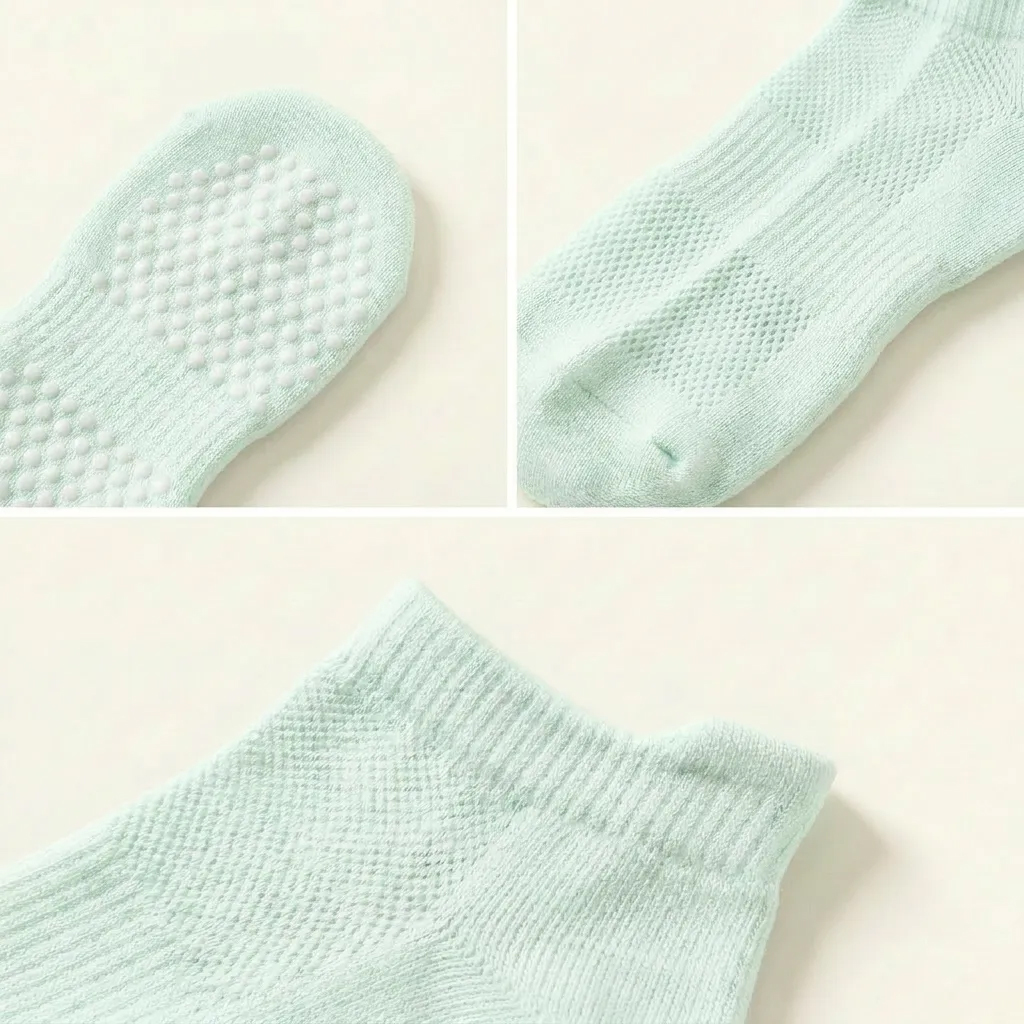
The resolution of quality issues in custom sock manufacturing relies on structured after-sales frameworks designed to preserve client supply continuity. When novel designs—such as custom pattern jacquards, V-shape herringbone weaves, or silicone non-slip grips—encounter defects during production, manufacturers evaluate the root cause through technical inspection logs. Supply agreements typically specify whether a resolution entails 100% free reproduction or partial credit depending on the defect threshold.
In custom hosiery production, machinery such as computerized high-speed jacquard equipment and 360° seamless heat transfer printing systems operate on strict calibration. Subtle variances in yarn tension or dye lots can occasionally impact small batches. Because custom products are tailored to client-specific branding, returning items for a monetary refund introduces operational friction; hence, re-running the specific item batch provides a direct resolution that satisfies strict order specifications.
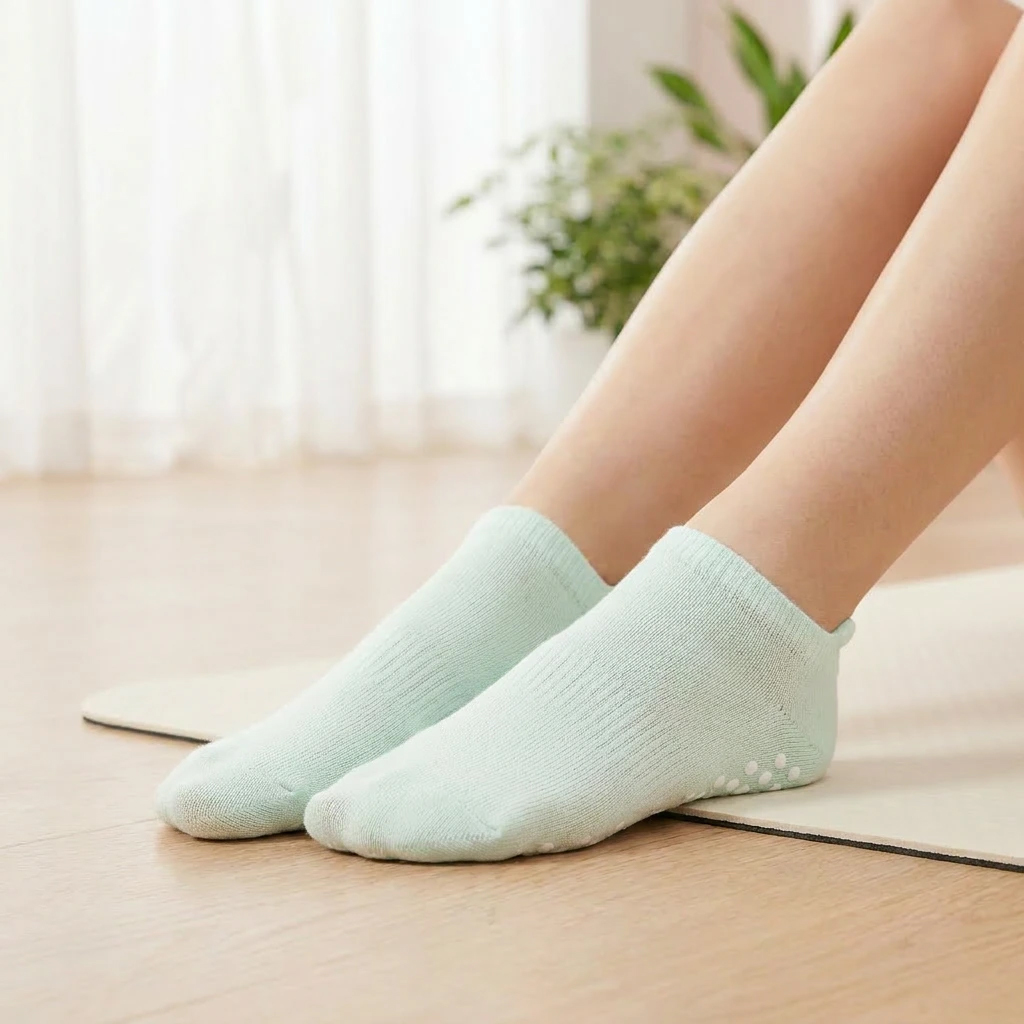
Furthermore, international export standards mandate compliance with skin-contact safety regulations. Products tested under Oeko-Tex 100 (Certificate 26.HCN.34091) and facilities audited under BSCI (Audit 25-0339304) uphold standard operating procedures for material testing and defect resolution. When non-conforming items occur, standard agreements enforce remanufacturing under identical yarn compositions—such as 80% combed cotton, 17% nylon, and 3% spandex—to preserve product performance in application environments like athletic teams, yoga studios, and fashion retail.
Data/Solution Comparison
Different resolution pathways carry distinct operational outcomes for custom hosiery procurement. The comparison table below outlines how common resolution methods operate within commercial sock manufacturing contracts.
| Resolution Method | Primary Application Scenario | Lead Time / Response | Client Inventory Impact | Manufacturer Support Protocol |
|---|---|---|---|---|
| Product Replacement / Remake | Manufacturing defects, pattern errors, stitching defects | 24-Hour response; fast-track reproduction | 100% order fulfillment preserved | Free replacement or reproduction up to 100% compensation |
| Monetary Refund | Complete order cancellation prior to yarn knitting | Standard financial processing cycle | Zero inventory delivered | Contractual refund deduction based on initial deposit terms |
| Account Credit / Balance Adjustment | Minor cosmetic variance or low-percentage defects | Immediate application to next invoice | Existing inventory retained for alternative use | Credit applied toward future custom production orders |
Frequently Asked Questions (FAQ)
Q1: Why do custom sock suppliers prefer offering replacements over refunds?
Custom hosiery is manufactured to specific design specifications, pantone colors, and sizing details. Remanufacturing defective pairs ensures the client receives the exact physical inventory required for their retail or promotional campaign while maintaining supply chain continuity.
Q2: What is the typical timeframe to receive replacement socks for a defective batch?
Leading sock manufacturers process claims with a 24-hour initial response protocol. Rapid sampling or reproduction takes approximately 3 to 7 days for prototyping or fast-tracked production lines, followed by expedited shipping.
Q3: How do quality certifications affect product replacement policies?
Certifications like BSCI and Oeko-Tex 100 mandate systematic batch tracking and quality assurance routines. Suppliers operating under these standard audits enforce transparent replacement policies to uphold international compliance standards.
Final Conclusion & Recommendations
Accepting replacements for defective custom or novelty socks represents an efficient, industry-standard method to guarantee batch completeness and product consistency. Buyers should establish explicit after-sales clauses, confirming supplier response times, quality inspection protocols (such as 100% manual checking), and replacement guarantees prior to bulk manufacturing. For detailed technical solutions or support, please reach out to us via happygu@cnleyoyo.com.
About Us
Yiwu Genke Apparel Co., Ltd. operates a 1,200 square meter manufacturing facility established in 2016, employing 89 personnel focused on high-end hosiery customization. The company maintains an annual production capacity of 12 million pairs backed by over 200 computerized high-speed jacquard machines and seamless printing equipment. Operating under BSCI and Oeko-Tex 100 certifications, the enterprise exports 91% of its output across the United States, Europe, and Australia, serving boutique fitness studios, corporate brand projects, and fashion retailers.
Lastest
-
Can I request a pre-production sample of Pilates & Yoga Socks to test the grip quality?
2026-10-02 -
What is the typical cost for creating a custom logo sample of Custom Promotional Socks?
2026-10-02 -
What are the latest eco-friendly yarn trends for manufacturing sustainable Sports Socks?
2026-10-02 -
Are there specific compliance certs required for importing Funny/Happy Socks for kids?
2026-10-02 -
How long does it take a factory to make and ship physical samples of Business Socks?
2026-10-02
SUBSCRIBE
INQUIRY