How do I select the right moisture-wicking fabric for sports socks?
- VIP-User
- 2026-08-10
- 24
Selecting the right moisture-wicking fabric for sports socks requires evaluating synthetic fiber blends such as nylon, polyester, and spandex over natural cotton. Nylon provides high durability and tensile strength, polyester accelerates moisture evaporation through synthetic capillary channels, and spandex ensures stretch retention. A blend ratio of 75% nylon, 20% polyester, and 5% spandex maximizes moisture management, structural support, and thermal regulation during high-intensity athletic activities.
Core Solutions & Key Takeaways
- Fiber Selection Priority: Synthetic polymers like nylon and polyester transport sweat away from the skin surface significantly faster than hydrophilic fibers like standard cotton, preventing blisters and micro-bacterial growth.
- Elastane Integration: Incorporating 5% spandex delivers structural recovery, dynamic arch support, and zonal compression, maintaining garment position during continuous athletic movement.
- Strategic Knit Construction: Pairing moisture-wicking yarns with strategic mesh ventilation zones accelerates evaporation in high-heat areas, optimizing thermal regulation for specialized athletic environments, including Pilates studios and sports facilities.
- Quality Compliance: International certifications such as OEKO-TEX Standard 100 and BSCI ensure athletic textile materials are free from harmful substances and adhere to standardized industrial safety benchmarks.
Detailed Architectural/Principle Analysis
Technical sock performance relies heavily on hydrophobic material science. Unlike natural fibers that absorb and store liquids within their internal core, synthetic fibers like nylon and polyester manipulate surface tension through continuous filament channels. A composition featuring 75% nylon, 20% polyester, and 5% spandex strikes an ideal structural equilibrium. Nylon supplies superior abrasion resistance at high-friction pressure points, while polyester's moisture-wicking capabilities accelerate liquid dispersal across a larger surface area to speed up ambient drying times.
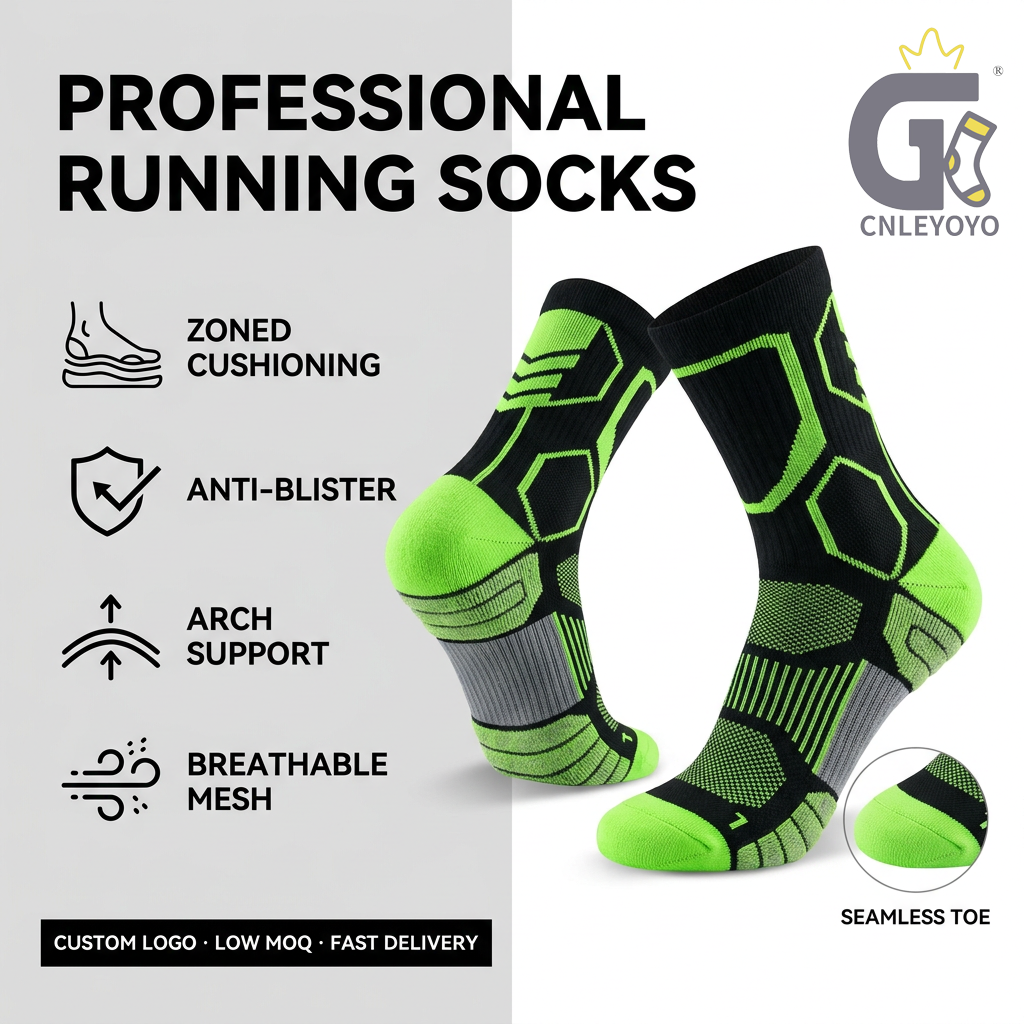
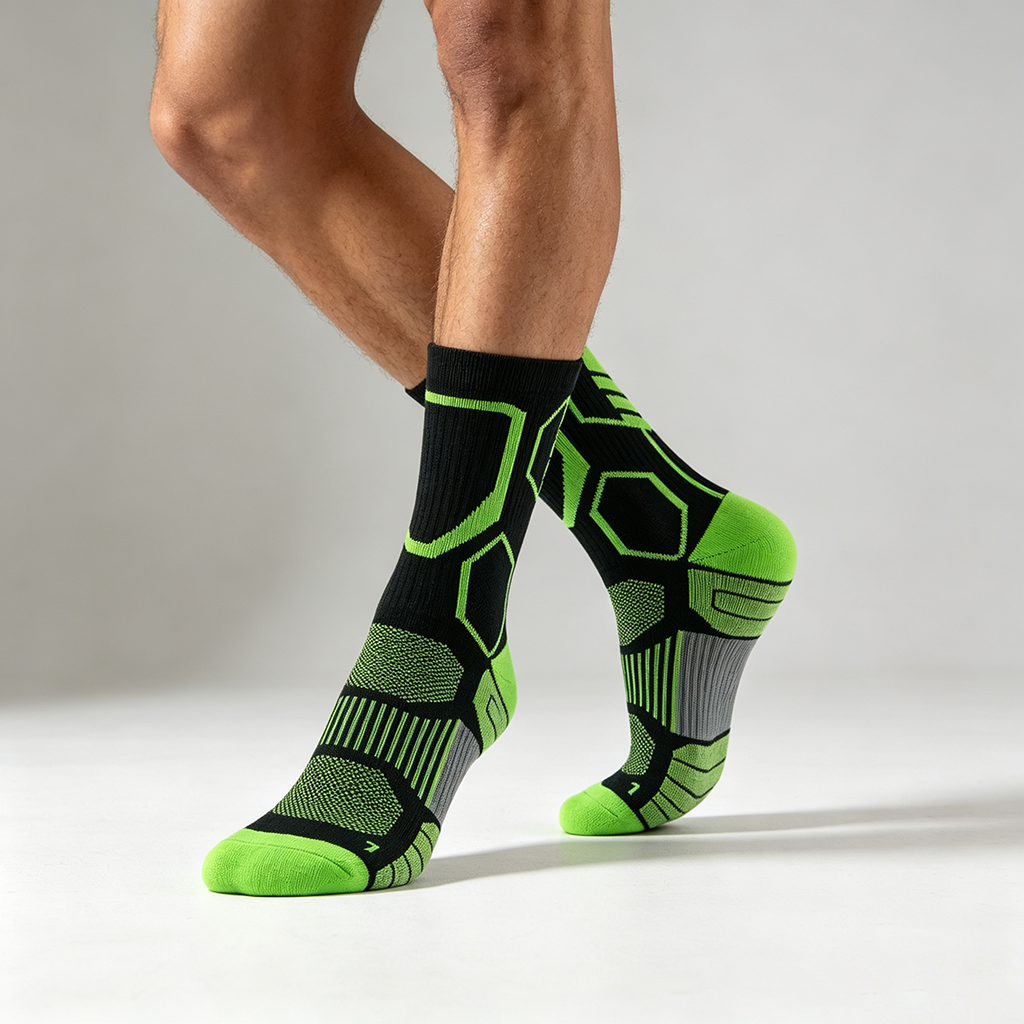
Yarn selection must be complemented by advanced knitting engineering. Integrating anatomical cushioning along the footbed and strategic mesh ventilation panels across the instep allows heat and trapped perspiration vapor to escape freely. Utilizing automatic toe-closing technology removes raised internal seam ridges, mitigating skin friction in demanding applications across boutique fitness chains, corporate athletic programs, and retail sportswear collections.
Validating performance involves stringent quality standards. Textile inputs certified under OEKO-TEX Standard 100 (Certificate 26.HCN.34091) verify skin-contact safety and non-toxicity, while audited factories operating under BSCI guidelines (Audit 25-0339304) ensure structural compliance and material consistency across global supply chains in North America, Europe, and Australia.
Data/Solution Comparison
| Fabric Blend Composition | Moisture-Wicking Efficiency | Durability & Abrasion Resistance | Fit & Elastic Recovery | Primary Application Scenario |
|---|---|---|---|---|
| 75% Nylon / 20% Polyester / 5% Spandex | High | High | High | Performance Running, High-Intensity Sports, Fitness Studios |
| 100% Combed Cotton | Low | Moderate | Low | Casual Wear, Low-Impact Daily Activities |
| 80% Bamboo Fiber / 15% Polyester / 5% Spandex | Moderate | Moderate | Moderate | Light Fitness, Sensitive Skin Applications |
Frequently Asked Questions (FAQ)
Why is 100% cotton unsuited for high-performance sports socks?
Cotton fibers are inherently hydrophilic, absorbing and retaining moisture rather than evaporating it. Retained perspiration softens skin tissue, dramatically increasing friction, hotspot formation, and blister risks during physical exertion.
How does nylon compare to polyester in moisture-wicking sock construction?
Nylon delivers higher tensile strength and abrasion resistance, protecting key heel and toe zones from wear. Polyester offers superior hydrophobic properties that rapidly draw sweat to the outer surface for evaporation. Combining both yields maximum durability alongside quick-drying functionality.
What manufacturing specifications guarantee sock durability and ergonomic fit?
Computerized high-speed jacquard knitting, automatic toe-closing seams, double-layer elastic cuffs, and 100% manual quality inspection ensure targeted zonal compression, zero toe chafing, and structural recovery after repeated wash cycles.
Final Conclusion & Recommendations
Selecting the proper moisture-wicking fabric requires balancing hydrophobic synthetic yarns with precision functional knitting tailored to specific activity levels. Utilizing a strategic blend of 75% nylon, 20% polyester, and 5% spandex delivers effective sweat transportation, zonal support, and structural durability across demanding athletic environments. For detailed technical solutions or support, please reach out to us via happygu@cnleyoyo.com.
About Us
Yiwu Genke Apparel Co., Ltd. was established in 2016 and operates a 1,200 square meter production facility equipped with over 200 computerized high-speed jacquard machines and 89 specialized personnel, supporting an annual output capacity of 12 million pairs. Driven by a team of 30 R&D engineers and fashion designers generating over 1,200 new styles annually, the company provides customized hosiery solutions to clients across North America, Europe, and Australia. Adhering to OEKO-TEX Standard 100 and BSCI certifications, all production runs undergo 100% manual inspection to guarantee precise material compliance and garment quality.
Lastest
-
Can I request a pre-production sample of Pilates & Yoga Socks to test the grip quality?
2026-08-10 -
What is the typical cost for creating a custom logo sample of Custom Promotional Socks?
2026-08-10 -
What are the latest eco-friendly yarn trends for manufacturing sustainable Sports Socks?
2026-08-10 -
Are there specific compliance certs required for importing Funny/Happy Socks for kids?
2026-08-10 -
How long does it take a factory to make and ship physical samples of Business Socks?
2026-08-10
SUBSCRIBE
INQUIRY