How do I choose the best silicone grip density for wholesale Pilates & Yoga Socks?
- VIP-User
- 2026-08-09
- 22
Choosing the best silicone grip density for wholesale Pilates and yoga socks requires balancing movement discipline, surface friction, and sock weight. High-density coverage (60%–80% sole area) is optimal for high-intensity Reformer Pilates, while medium density (40%–60%) suits standard mat yoga. Selecting 100% liquid silicone or PVC dispensing across key pressure points maximizes traction without compromising yarn breathability or foot comfort.
Core Solutions & Key Takeaways
- Match Friction to Exercise Discipline: Reformer Pilates carriage work demands high grip density (60%–80% coverage) to prevent foot slippage on vinyl pads, whereas standard mat yoga requires targeted medium density (40%–60% coverage) focusing on the heel and ball of the foot.
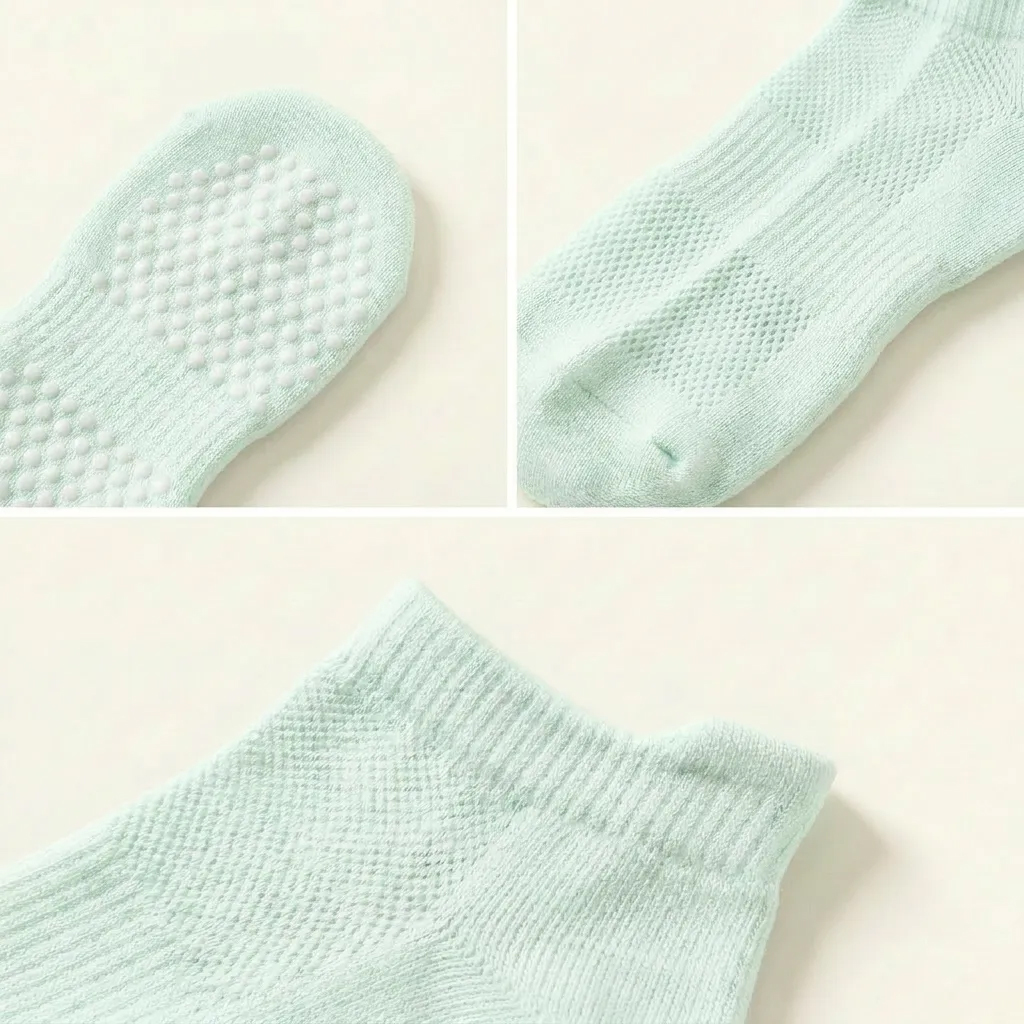
- Prioritize Base Material Breathability: High-density silicone application reduces sock surface ventilation. Pairing dense grip layouts with an 80% combed cotton, 17% nylon, and 3% spandex yarn construction integrated with honeycomb breathable mesh maintains moisture management.
- Select Superior Dispensing Techniques: Professional PVC/Silicone dispensing equipment ensures pattern adhesion that withstands high-torque lateral shifts without peeling during studio sessions.
- Commercial Versatility across Applications: Tailored grip density supports specialized fitness clients including Pilates studios, athletic teams, corporate promotional merchandise, and boutique retail lines.
Detailed Architectural & Principle Analysis
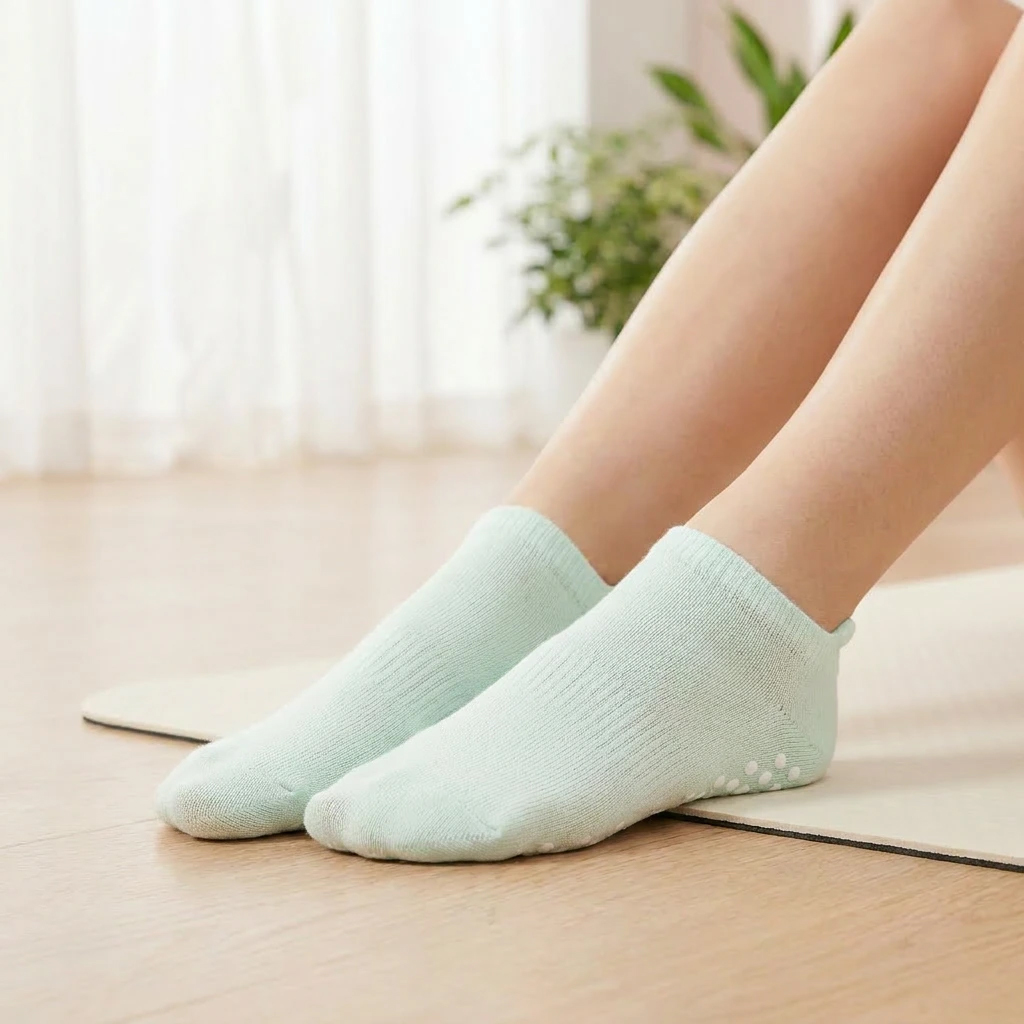
Selecting silicone grip density involves analyzing how foot pressure distributions interact with studio surfaces. For athletic gear and studio equipment, friction dynamics vary between traditional floor mats and mechanical apparatuses. In low-cut Pilates socks, an anti-friction heel tab paired with V-shape herringbone jacquard keeps the sock locked on the foot, allowing the sole grips to engage fully with the floor or carriage surface.
When engineering low-cut studio hosiery, manufacturing facilities employ computerized high-speed jacquard machines and automatic toe-closing to eliminate interior seam pressure. Silicone or PVC grips are applied using specialized dispensing machinery. High grip coverage provides structural stability for dynamic movements, while open-mesh knitting along the arch regulates foot thermal balance. Every batch must meet rigorous safety and chemical compliance standards, certified under OEKO-TEX Standard 100 (Certificate 26.HCN.34091) and audited via BSCI (Audit 25-0339304) to ensure skin-safe contact during intense sweat exposure.
Practical implementation data from North American boutique fitness chains indicates that supplying custom grip socks with targeted density maps yields higher customer satisfaction. Projects utilizing high-density grip placements across full footbed zones reported an 85%+ client re-order rate, verifying that exact grip density configuration directly correlates with performance and commercial durability in professional studio environments.
Data & Solution Comparison
| Grip Density Level | Coverage Area (%) | Primary Application | Recommended Fabric Blend | Key Performance Attribute |
|---|---|---|---|---|
| Low Density | 20% – 40% | General Studio & Loungewear | 80% Combed Cotton / Spandex | Maximum breathability, light traction |
| Medium Density | 40% – 60% | Mat Yoga & Barre Practice | Combed Cotton + Honeycomb Mesh | Balanced flexibility and slide protection |
| High Density | 60% – 80% | Reformer Pilates & Intense Athletics | Combed Cotton / Nylon / Spandex | Maximum mechanical grip, zero foot slippage |
Frequently Asked Questions (FAQ)
Q: What is the standard minimum order quantity (MOQ) for custom-printed silicone grip socks?
A: Custom design orders featuring specialized logo integration or custom Pantone color matching require a low threshold MOQ of 100 pairs per design and color.
Q: How do silicone grip socks hold up during commercial laundry cycles?
A: High-grade PVC and silicone grips bonded to combed cotton blends withstand repeated machine washing. Rigorous 100% manual inspections during production confirm that grip adhesion remains intact without cracking or peeling.
Q: What are the lead times and shipping solutions for international wholesale shipments?
A: Rapid prototyping takes 3–7 days, followed by mass production delivery in 25–30 business days. Global delivery choices include Express (DHL, FedEx, UPS) for quick turnaround, as well as Sea and Air Freight via DDP or DDU modes for bulk shipments.
Final Conclusion & Recommendations
Determining the ideal silicone grip density for wholesale Pilates and yoga socks relies on aligning sole traction coverage with the intended fitness discipline. High-density patterns deliver the control needed for mechanical Reformer equipment, while lower density configurations offer lightweight flexibility for standard mat practices. Partnering with a specialized manufacturer capable of 360° heat transfer printing, precision jacquard knitting, and custom silicone dispensing streamlines development from original design to bulk delivery. Production orders benefit from flexible payment structures (such as Deposit + Balance via T/T or Alibaba Trade Assurance) to support scaling inventory needs efficiently. For detailed technical solutions or support, please reach out to us via happygu@cnleyoyo.com.
About Us
Yiwu Genke Apparel Co., Ltd. operates as a premier manufacturer in the high-end sock customization sector. Established in 2016, the company operates a 1,200 square meter facility supported by 89 skilled staff members and 30 R&D engineers, yielding an annual capacity of 12 million pairs. Accredited with OEKO-TEX 100 and BSCI certifications, the company supplies specialized hosiery solutions to clients across North America, Europe, and Australia.
Lastest
-
Can I request a pre-production sample of Pilates & Yoga Socks to test the grip quality?
2026-08-09 -
What is the typical cost for creating a custom logo sample of Custom Promotional Socks?
2026-08-09 -
What are the latest eco-friendly yarn trends for manufacturing sustainable Sports Socks?
2026-08-09 -
Are there specific compliance certs required for importing Funny/Happy Socks for kids?
2026-08-09 -
How long does it take a factory to make and ship physical samples of Business Socks?
2026-08-09
SUBSCRIBE
INQUIRY