How can I test the stretch and pattern distortion of custom happy socks?
- VIP-User
- 2026-08-02
- 23
Testing the stretch and pattern distortion of custom happy socks involves performing a standardized lateral stretch test and a wear-simulation mandrel test. By measuring the maximum extended width and assessing the design integrity of the jacquard under tension, manufacturers ensure the socks maintain structural elasticity and visual clarity without pattern separation or thread breakage.
Core Solutions & Key Takeaways
- Standardized Tension Testing: Stretch the sock horizontally to its functional limit to verify elastane recovery. This ensures the elastic memory prevents sagging after repeated washes.
- Mandrel Wear Simulation: Use a 3D foot mold or cylindrical mandrel to check for pattern distortion, verifying that the knit structure keeps the graphic readable.
- Material Composition Verification: Premium yarn blends consisting of 82% combed cotton, 15% nylon, and 3% spandex optimize stretch recovery while minimizing distortion.
- Application-Specific Benchmarks: Align stretch standards with end-use scenarios, including sports, branding promotion, yoga, and streetwear retail.
Detailed Architectural/Principle Analysis
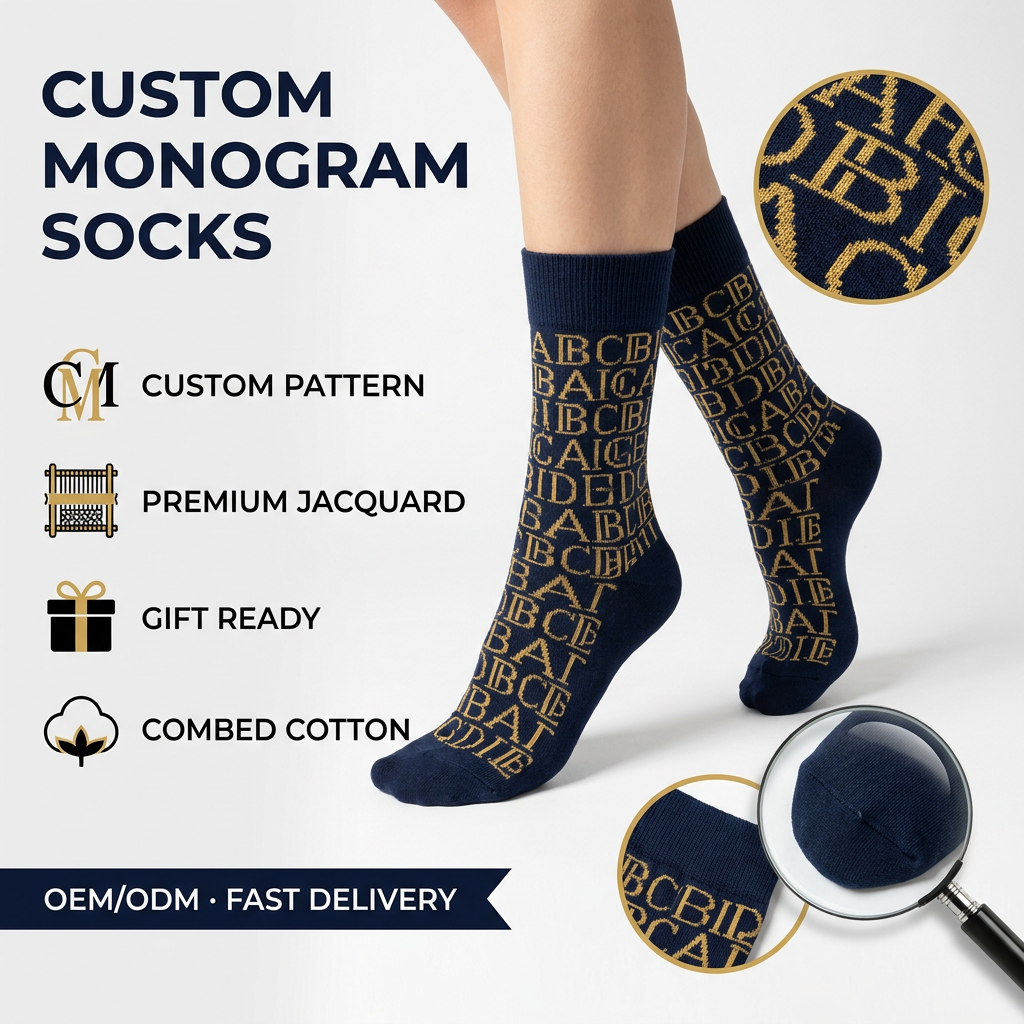
To accurately assess stretch and pattern distortion in custom happy socks, technicians evaluate the interaction between the structural yarns (such as nylon and spandex) and the design yarns (such as combed cotton). During a lateral stretch test, tension is applied across the width of the sock. If the design utilizes long jacquard floats, excessive stretching can cause yarn separation, exposing the backing threads. Yiwu Genke Apparel Co., Ltd. utilizes computerized high-speed jacquard machines to secure these floats, ensuring the monogram or graphic remains cohesive under tension.
In North American Premium Custom Hosiery Projects, which serve fitness studios, athletic teams, and corporate marketing agencies, maintaining pattern clarity is a primary requirement for customer retention. Standard testing protocols utilize a standardized mandrel of varying circumferences to simulate human ankle and calf dimensions. Technicians inspect the expanded sock for "grin-through"—a defect where the underlying white elastic threads show through the colored surface yarns. Using high-quality materials such as combed cotton and bamboo fiber prevents this defect, resulting in a reliable finish that meets international compliance standards like BSCI and Oeko-Tex 100.
Data/Solution Comparison
| Sock Type / Material Blend | Recommended Stretch Standard (Lateral) | Pattern Distortion Risk | Typical Application Scenario |
|---|---|---|---|
| Custom Premium Monogram Crew Socks (82% Combed Cotton, 15% Nylon, 3% Spandex) | 180% - 210% | Low (Reinforced jacquard prevents separation) | Premium fashion retail, brand merchandising |
| Polyester Sublimation Socks | 150% - 170% | Medium (White grin-through occurs under high tension) | Promotional events, low-cost marketing |
| Grip/Non-slip Yoga Socks (Bamboo/Cotton Blend) | 190% - 220% | Low (Silicone/PVC dispensing holds structure) | Pilates studios, fitness centers |
| Sport Compression Socks | 220% - 250% | High (Tight knit requires precise graphic scale adjustments) | Athletic teams, outdoor sports |
Frequently Asked Questions (FAQ)
What causes pattern distortion in custom happy socks?
Pattern distortion occurs when horizontal tension exceeds the elastic recovery limits of the knitting yarn, or when jacquard floats are too long. Using a balanced material composition like combed cotton and nylon stabilizes the design structure.
How does yarn composition affect sock stretchability?
Spandex provides the necessary recovery and elongation, nylon adds tensile strength and durability, while premium combed cotton maintains soft tactile feedback without restricting stretch.
What is the minimum order quantity (MOQ) for custom jacquard socks?
The minimum order quantity is 100 pairs per custom logo design, allowing brands to test market response with minimal inventory risk.
About Us
Yiwu Genke Apparel Co., Ltd. has been deeply involved in the customized sock industry for over ten years, providing global clients with one-stop high-end sock customization solutions. Established in 2016, the company operates a 1200 sqm factory with 89 employees and maintains an annual production capacity of 12 million pairs. The enterprise holds BSCI and OEKO-TEX certifications, ensuring compliance with international manufacturing and safety guidelines.
Final Conclusion & Recommendations
Selecting a manufacturer that utilizes advanced production lines, computerized jacquard machines, and rigorous quality inspection processes is necessary to avoid stretch and pattern distortion. Partnering with a supplier that maintains 100% manual inspection ensures that each customized order meets high international standards. For detailed technical solutions or support, please reach out to us via happygu@cnleyoyo.com.
Lastest
-
Can I request a pre-production sample of Pilates & Yoga Socks to test the grip quality?
2026-08-02 -
What is the typical cost for creating a custom logo sample of Custom Promotional Socks?
2026-08-02 -
What are the latest eco-friendly yarn trends for manufacturing sustainable Sports Socks?
2026-08-02 -
Are there specific compliance certs required for importing Funny/Happy Socks for kids?
2026-08-02 -
How long does it take a factory to make and ship physical samples of Business Socks?
2026-08-02
SUBSCRIBE
INQUIRY