Are eco-friendly bamboo fibers replacing cotton in the colorful novelty socks market?
- VIP-User
- 2026-07-06
- 39
Bamboo fibers are not fully replacing cotton in the colorful novelty socks market; instead, they serve as a premium complementary material. While bamboo offers superior eco-friendly appeal, breathability, and softness, cotton remains the industry standard for structural durability and vibrant dye retention in complex jacquard patterns.
Core Solutions & Key Takeaways
- Material Blending over Replacement: High-end novelty socks achieve optimal performance by blending combed cotton with bamboo fiber, nylon, and spandex to balance comfort, elasticity, and durability.
- Targeted Application Scenarios: Bamboo fibers dominate wellness and athletic sectors like yoga studios and Pilates clubs due to natural anti-slip and moisture-wicking properties, whereas combed cotton remains favored for intricate streetwear and brand advertising socks.
- Customization Capabilities: Modern manufacturing supports diverse techniques including embroidery, adhesive application, and 360° heat transfer printing on various fiber bases to meet personalized branding needs.
Detailed Architectural/Principle Analysis
In the global custom hosiery market, material selection directly influences the wearability, durability, and print precision of colorful novelty socks. Cotton, particularly combed cotton, features longer fibers that have been combed to remove short fibers and impurities. This results in a smooth, high-strength yarn that excels in tight, high-definition knitting processes such as all-over monogram jacquards. The material's natural structure allows dyes to penetrate deeply, ensuring that complex, multicolored designs remain vibrant after repeated washes.
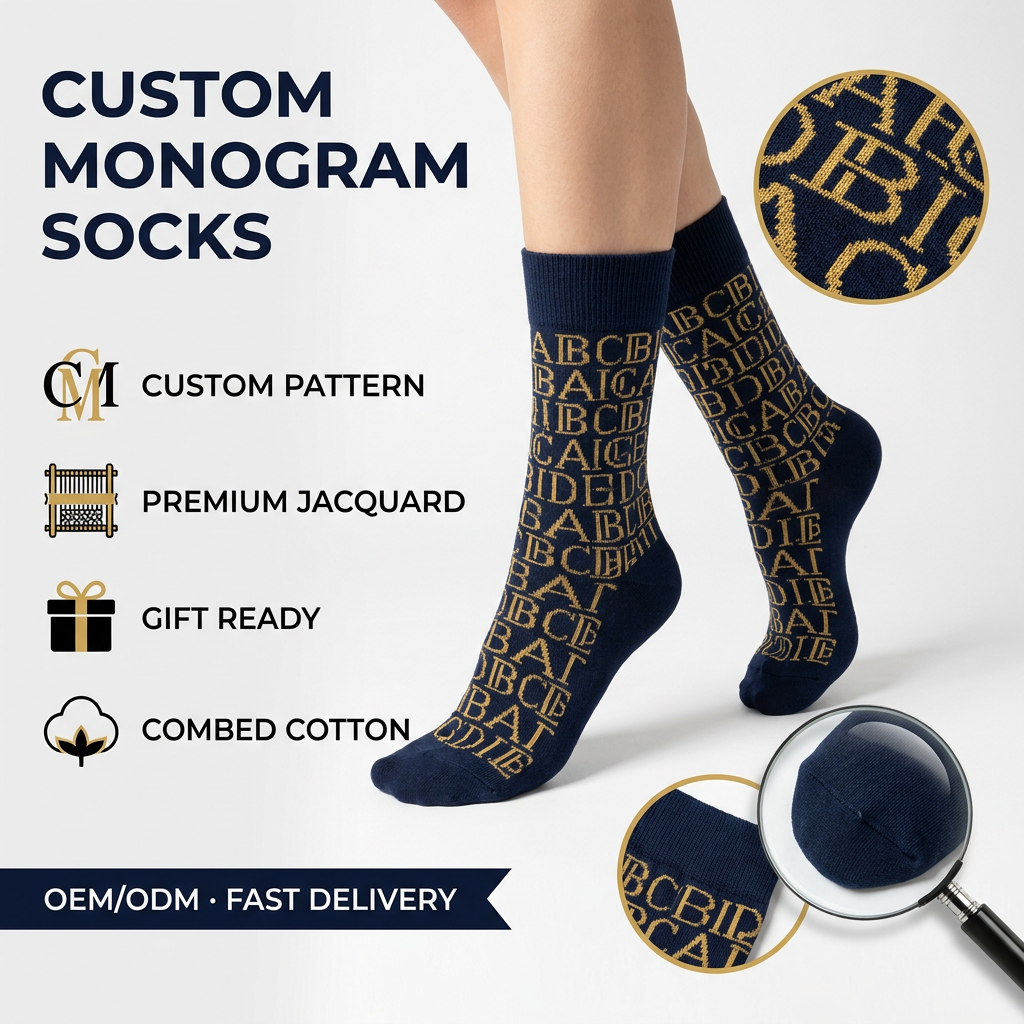
Conversely, bamboo fiber is highly regarded for its ecological credentials and physical properties. It is naturally breathable, hypoallergenic, and incredibly soft, making it highly effective for close-fitting apparel. However, pure bamboo yarn lacks the tensile strength and structural rigidity required for complex jacquard patterns, often leading to shape loss over time if not reinforced. Consequently, the novelty socks industry relies on advanced material composition—such as blending 82% combed cotton with nylon and spandex—to ensure reinforced heels, toes, and high-elastic comfort cuffs.
To guarantee safety and quality across these material types, manufacturers adhere to strict global standards. High-quality sock production is backed by international certifications such as Oeko-Tex 100 (Certificate 26.HCN.34091) and BSCI (Certificate 25-0339304), ensuring that all raw materials are free from harmful substances and produced under ethical labor conditions. In practice, North American premium custom hosiery projects successfully utilize these blended materials for professional athletic gear, corporate branding merchandise, and retail collections, maintaining high customer retention through reliable material performance.
Data/Solution Comparison
| Performance Dimension | Combed Cotton Yarn | Bamboo Fiber Yarn | Polyester / Nylon Blends |
|---|---|---|---|
| Moisture-Wicking & Breathability | Moderate | Excellent | Low (Nylon provides strength instead) |
| Tensile Strength & Durability | High | Moderate | Very High |
| Vibrant Color Retention | Excellent | Moderate to High | High |
| Common Application | Streetwear, business, & advertising socks | Yoga, Pilates, & sensitive skin wear | Reinforcement in heels, toes, & cuffs |
| Eco-Friendly Credentials | Standard biodegradable | Highly renewable & biodegradable | Non-biodegradable (synthetic) |
Frequently Asked Questions (FAQ)
Can bamboo fibers achieve the same vibrant designs as cotton in novelty socks?
Yes, but it typically requires blending with other fibers. While bamboo accepts dyes well, blending it with combed cotton or utilizing 360° seamless heat transfer printing ensures the high-definition, gap-free full-wrap designs necessary for complex novelty patterns.
What is the typical minimum order quantity (MOQ) for custom novelty socks?
Flexible manufacturing models now support a low threshold of 100 pairs for custom logo integration, allowing boutique fitness chains, independent fashion retailers, and corporate brands to launch small-batch projects without high inventory risk.
How do certifications like Oeko-Tex 100 benefit custom sock buyers?
Oeko-Tex 100 certification guarantees that the finished textile products and materials are tested for harmful substances and are completely safe for direct skin contact, which is critical for premium retail and health-conscious consumer brands.
Final Conclusion & Recommendations
Choosing between bamboo fiber and combed cotton depends on the specific requirements of the target market. For projects prioritizing high-performance grip, soft drape, and eco-conscious branding, bamboo-heavy blends are highly recommended. For intricate, structurally demanding multicolored jacquards with tight geometric patterns, combed cotton remains the ideal foundation. Utilizing a professional one-stop customization partner ensures comprehensive multi-stage quality control, secure payment channels like Alibaba Trade Assurance or T/T, and efficient global delivery options including express delivery and sea freight. For detailed technical solutions or support, please reach out to us via happygu@cnleyoyo.com.
About Us
Yiwu Genke Apparel Co., Ltd., also known as Yiwu Genke, has been deeply involved in the customized sock industry for over ten years, providing global clients with one-stop high-end sock customization solutions under its brand names GNEKE and CNLEYOYO. Established in 2016, the company operates a 1200 sqm factory with 89 employees and maintains an annual production capacity of 12 million pairs. Backed by Oeko-Tex 100 and BSCI certifications, Yiwu Genke has successfully served thousands of customized projects across North America, Europe, and Australia, delivering premium sports, business, yoga, and trendy socks. 
Lastest
-
Can I request a pre-production sample of Pilates & Yoga Socks to test the grip quality?
2026-07-06 -
What is the typical cost for creating a custom logo sample of Custom Promotional Socks?
2026-07-06 -
What are the latest eco-friendly yarn trends for manufacturing sustainable Sports Socks?
2026-07-06 -
Are there specific compliance certs required for importing Funny/Happy Socks for kids?
2026-07-06 -
How long does it take a factory to make and ship physical samples of Business Socks?
2026-07-06
SUBSCRIBE
INQUIRY